
Most of the couples with GAD (Generalized Anxiety Disorder) can’t perform normal activities with their spouses, such as open communication, intimacy, enjoying time together, or even discussing issues properly.
Marriage and anxiety can’t go hand in hand and may lead to communication breakdowns, arguments, disputes, distance, and even a lack of intimacy over time, which could lead to further big issues.
You need to identify if your spouse has mental struggles so that you can help them on time before it’s too late. One way to do this is by paying attention to their behaviors and habits and then providing them with the necessary support, like couples therapy and assisting them in overcoming their stress.
Need to know how to support your spouse when they’re going through a mental struggle? Read the entire post.
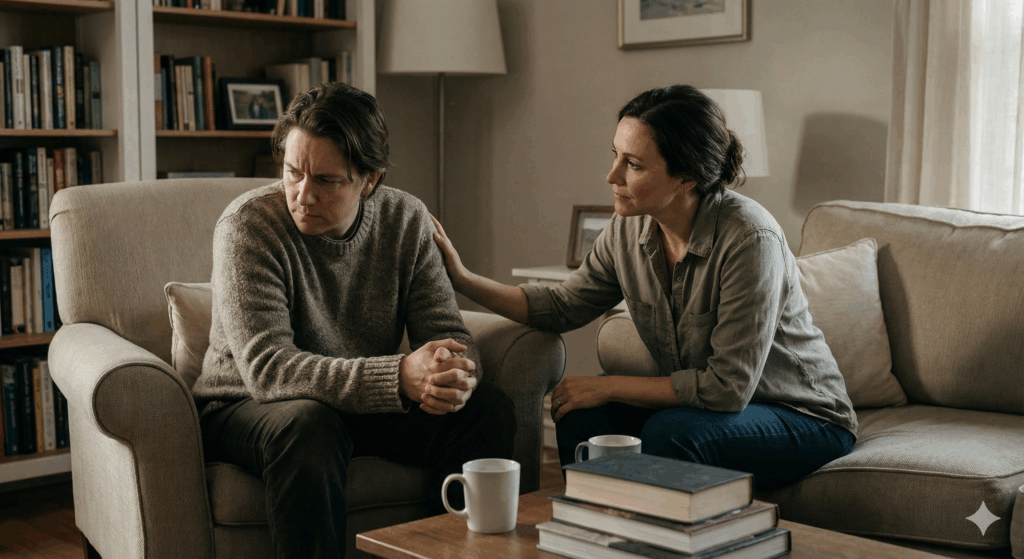
What Is Marriage and Anxiety?
Marriage anxiety is a stress that one or both partners may have, keeping them worried, stressed and concerned about their relationships. They might worry more about what is going to occur in the future and might overthink which can lead to poor communication, intimacy, decision-making, and day-to-day interactions.
The fears are often based on disagreements, emotional invalidity, or lack of support. The most appropriate thing you can do to assist your partner with anxiety is to learn that they have anxiety and then take the necessary steps.
Impact of Anxiety On Marriage
Anxiety creates many issues with your marriage, such as loss of trust, fears and self-doubt, which will push the couple away, and later cause other marital problems.
Erosion of Trust
Anxiety triggers your emotions, resulting in imbalance of your hormones and mood swings. You might ask yourself whether your partner is actually on your side or do they have your best interests in mind. It may cause resentment and hence make it hard to deal with relationships and decisions.
Self-Doubt
One may start self doubt and think of himself as the cause of every bad situation. It may get worse as time goes on and instill uncertainty concerning reactions, perceptions, and ultimately the worth of a person. Repeated anxiety attacks reinforce harmful beliefs, making it harder to break the cycle without the help of a spouse and medical experts.
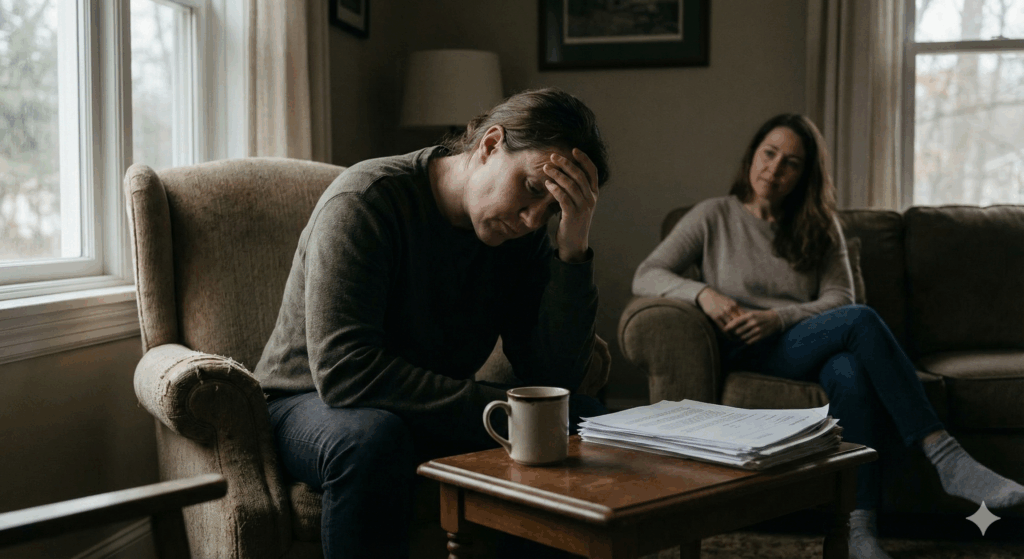
Fear Around Relationships
The spouse with anxiety can develop fear around relationships and may associate closeness with danger. It can form unhealthy connections and lead to disagreements and arguments.
How to Identify Your Partner’s Mental Health Struggles?
To determine whether your partner is anxious or not, you must be able to identify the pattern of conflict recurrence and observe the communication style adopted.
You must also seek emotional validation, notice any loss of autonomy and healthy habits, and pay attention to the physical symptoms.
Recognize Recurring Conflict Patterns
If your spouse fights repeatedly, seems tense or worried before starting to fight with you, they’re probably anxious. They need extra care and support from you to get mentally stable.
Watch Communication Styles
See the communication pattern of your spouse. When do they get angry, what triggers them to talk rude to you or what kind of conversations make them get angry at you. Knowing these root causes can help you manage their mood swings.
Look for Emotional Invalidation
If you share your feelings with your spouse, compliment them or try to show your love to them in any way, and they don’t pay any attention to it, it may indicate their anxiety. When the person is anxious, they find even such beautiful words boring.

Notice Loss of Autonomy
One person starts trying to control small choices like what to wear, who to meet, or where to go. Too much checking or limiting free time makes the other feel trapped. This usually comes from a fear of things going wrong, and it’s a clear sign that your spouse is anxious.
Identify Physical and Behavioral Symptoms
Look for quick anger, withdrawing, trouble sleeping, or closing off feelings. Eating more or less, big mood changes, or no energy for daily tasks are also signs. These body responses often mean the mind is worried and needs gentle support.
How Couples Can Support Each Other Through Mental Health Challenges?
If you or your partner is struggling with marriage anxiety, to support each other, you need to recognise your own stress first and look for the signs and the needs. Learning effective stress management and anxiety.
Recognizing Your Own Stress
The most important thing before you look at your spouse is to first know what your tension, worries, and anxieties are. Learn how your stress influences your concentration and duties in order to take the necessary steps on your behalf, and then help your partner at all times.If you are stressed yourself, until you’re fine, you might find yourself incapable of assisting your partner with their anxiety or stress.
Spotting Subtle Signs of Your Partner’s Needs
Even your partner might not request you to help them with their anxiety because they might not be aware of it. You should look for symptoms as indirect ones, like complaints, hints or behavioural changes. Indirectly, people with low self-esteem often need encouragement, and this is the reason why it is all the more important to detect their small signals.
Learning Effective Stress Management Together
Learn how to deal with stress in marriage to protect your and your partner’s well-being and mental health. Strengthen yourself by learning simple tips like problem-solving, mindfulness, relaxation exercises, and guided imagery. These will help you calm down and stay supportive. Doing this together will make your relationship stronger and build emotional strength overall.
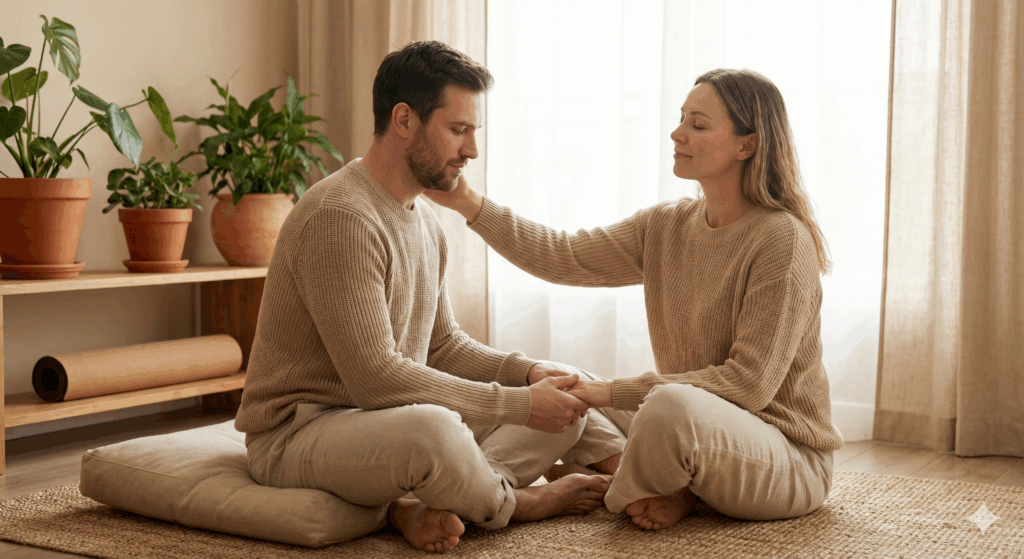
Anxiety Treatment
Extreme generalized anxiety might require specialized management, such as couples therapy. Possible therapeutic options that can be effective are EMDR for trauma, medication, examinations or structured anxiety-reduction methods. At the same time as the treatments, consider your relationship and stay connected with your spouse, providing them with emotional and physical support, which will help them recover faster.
Set Healthy Boundaries in Relationships
Sometimes it is not right to rescue someone or believe that your love alone will take away your partner’s anxiety. Trying to handle everything by yourself can actually make your partner weaker and make them need even more help. It is not helpful, and it can get worse over time.
Real love means standing by each other and looking for the right professional help together, supporting them as they learn to stand on their own again. You give care, but you also protect your own well-being and energy. In this way, both of you become stronger, and the marriage stays healthy and balanced.
Communicate Without Frustration or Burnout
Many husbands or wives jump fast to fix the problem when their partner shares a sad or hard feeling. They give advice or force to do something right away. But most of the time, the person only wants to feel heard and understood first. Saying “I see you feel hurt, or that sounds very heavy “, shows real love and makes the heart open more. Do not push for quick change or therapy with strong words. Speak softly and say, “Let us look for help together if you want.“
Getting Professional Therapies
Couple therapy is a specialized psychological support that is given to partners to treat their anxiety and make their lives peaceful. It’s designed for the condition of couples and after understanding their struggles.
Emotionally focused therapy helps partners build stronger emotional bonds and face depression or anxiety without harming their relationship. With this approach, the couple works together as a team during the therapy process, and both partners feel they are not facing the problem alone.
Support Your Partner In A Mental Issue
Sometimes, the mental health crises get worse to the extent where your partner has suicidal thoughts, substance abuse or a complete emotional shutdown. The normal patience-based communication may not be enough during these moments. You need to respond with immediate action, knowing when to bring in experts and protecting your own well-being in the process.
If there are direct serious warning signs, directly contact crisis hotlines, emergency services, or a mental health professional to prevent complications. According to research, timely intervention is often life-saving.
Take Away
Marriage and anxiety can be harmful for both partners, whether one has it or both. It creates distance between both, damages trust, breaks down communication, leads to disputes, and sometimes to divorce if nothing is done about it.
The initial step is trying to determine whether your spouse has anxiety, regardless of the type of anxiety. You can do this by paying attention to their actions, complaints, relationships, and the way they talk to you. You also get to understand their mental state and how often they share their feelings with you or keep them to themselves.
FAQS
Is it normal to be anxious about marriage?
Feeling anxious about marriage is very common, even in good relationships, because it is a big life change with many unknowns. Most people feel worried before or in the early days of marriage, and it does not mean something is wrong.
Why is my marriage giving me anxiety?
Marriage can cause anxiety from big changes, new roles, finances, different families, daily adjustments or old fears coming up. It often happens in the first year when two lives mix and everything feels new and heavy.
What is the 3-3-3 rule of anxiety?
The 3-3-3 rule means name three things you see, three sounds you hear and move three parts of your body. It helps calm the mind fast by bringing focus to the present when worry feels too big.
