In every relationship, there are circumstances where you need to discuss difficult things with your partner. The same goes for marriages. You won’t always have smooth conversations. So when you need to speak some hard or bitter truths, focus on words and strategies that don’t hurt your spouse.
If you are in the same boat and planning a hard talk, here are 10 ways to have a hard conversation without hurting your spouse.
10 proven Ways to have a hard conversation
Anyone can feel overwhelmed while having hard conversations with their spouse. Here is what we believe works great, even when a person does not feel like listening to some harsh truths. Practice all or a few of the following techniques, and you will be able to deliver your message without offending your partner.
- Think of success before starting
Before you open your mouth, picture a successful outcome. Ask yourself, what do you want from this conversation? When you start a hard talk with a clear goal in mind, you are less likely to go off track or say something you will regret. A positive mindset before the conversation sets the right tone and helps both of you stay focused on resolution rather than conflict.

- Use first person proverbs to prove your stance
Instead of pointing fingers, speak from your own experience. Saying “I feel hurt when this happens” lands very differently than “You always do this.” First-person statements take the blame out of the conversation and make your spouse feel less attacked. This small shift in language keeps the dialogue open, honest, and productive, giving both of you space to be heard without becoming defensive.
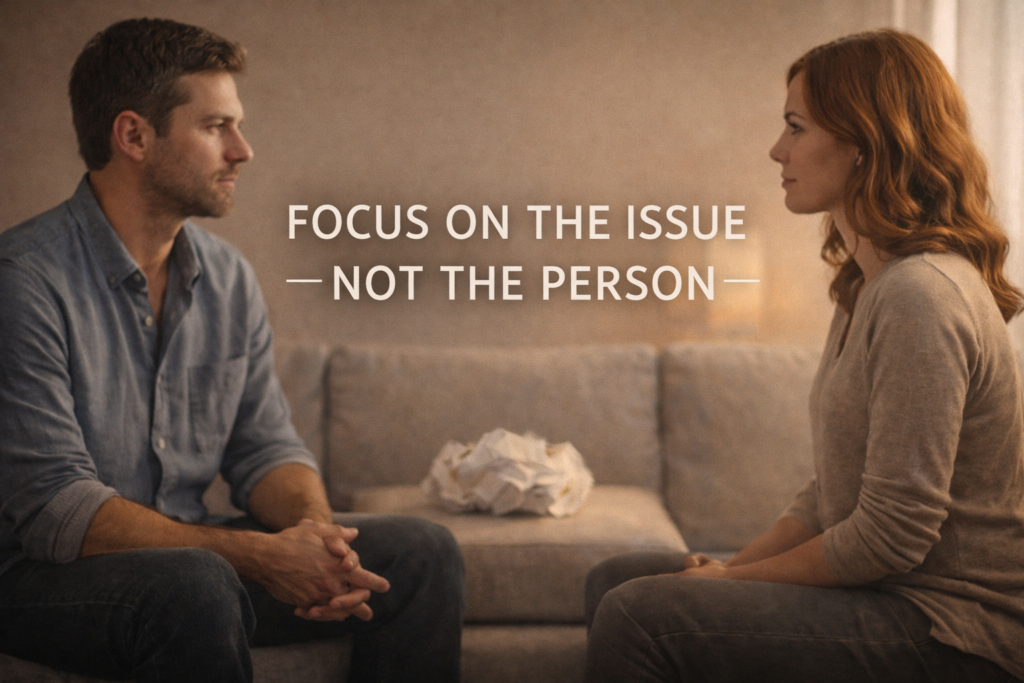
- Talk about the issue, don’t blame the person
There is a big difference between addressing a problem and attacking a person. Focus on the behaviour or situation that is bothering you, not on your spouse’s character. Saying “This situation made me uncomfortable” is far healthier than “You are the problem.” When you separate the issue from the person, your spouse is more likely to listen, cooperate, and work toward a solution with you.
- Be a Good listener
Hard conversations are not one-way streets. Once you have said your piece, stop and genuinely listen to your spouse. Do not just wait for your turn to speak; truly hear what they are saying. Good listening means maintaining eye contact, nodding, and resisting the urge to interrupt.
- Reflect and Validate
After your spouse speaks, reflect on what you heard. Say something like, “So what I’m hearing is…” and summarise their point. Then validate their feelings, even if you disagree. Validation does not mean agreement; it means acknowledging that their emotions are real and understandable.

- Don’t turn the conversation into a fight
It is easy for a hard conversation to turn into an argument, especially when emotions are running high. Watch your tone, your body language, and your word choices. If things start heating up, take a short break and return when both of you are calmer.
- Direct talks with a gentle tone
Being direct does not mean being harsh. You can say exactly what you mean while still being kind and respectful. A gentle tone softens even the hardest truths and makes them easier for your spouse to receive. Avoid sarcasm, raised voices, or cold silence; these block communication. Speak clearly, stay calm, and choose words that are honest but thoughtful.

- Ask open-ended questions
Open-ended questions invite your spouse to share more than just a yes or no. Instead of asking “Are you upset?”, try “How have you been feeling about this lately?” These questions show genuine curiosity and create space for deeper, more meaningful conversation. They also prevent misunderstandings by giving your spouse the chance to fully explain their perspective.
- Be a problem solver
Walk into the conversation as a team player, not an opponent. Your shared goal should be finding a solution that works for both of you. Brainstorm together, be open to compromise, and avoid the mindset of “my way or nothing.” When your spouse sees that you are genuinely trying to fix the problem rather than just prove a point, it builds trust and brings you closer.
- Admit your role and position it well
No conflict is ever entirely one person’s fault. Be honest with yourself and acknowledge the part you played in the situation. Admitting your role is not a sign of weakness; it is a sign of maturity and self-awareness. Positioning your admission as a commitment to do better shows your spouse that the relationship is more important to you than your ego.
Final Words:
These 10 Ways to have a hard conversation without hurting your Spouse help you have your issues resolved without offending them. Just be open, be practical, focus on problem-solving, try to be gentle to your spouse, and keep a goal of fixing the issue instead of creating more. You can also discuss any issues with our experts for better counselling and the right approach towards your relationships.
FAQ
What are the 4 D’s of difficult discussion?
4 D’s of difficult discussion are “Discover, define, discuss and decide”. These are defined to win difficult discussions.
What is the 80-20 rule of listening?
These rules define the importance of listening more and talking less. It applies as listen 80% during the conversation, while talking 20% only.
